

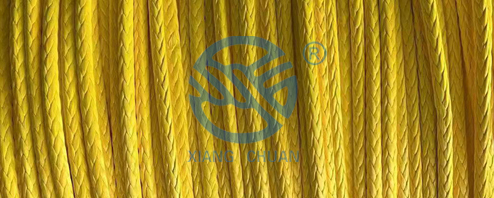
Double braided nylon rope, distinguished by its unique structure—an inner braid enclosed within an outer braid—and the inherent properties of nylon, has become a staple in numerous industries and daily applications. Unlike single-braided or twisted ropes, its double braided design enhances tensile strength, abrasion resistance, and flexibility, while nylon adds elasticity, water resistance, and durability. These combined advantages make it adaptable to a wide range of scenarios, but it truly excels in environments where reliability, strength, and resistance to external stressors are non-negotiable. Below is a detailed exploration of the scenarios where double braided nylon rope stands out as the optimal choice.
1. Marine and Boating Applications: Navigating Water-Based Challenges
The marine industry is one of the most prominent fields where double braided nylon rope shines, and for good reason. Boating, sailing, fishing, and waterfront operations demand ropes that can withstand constant exposure to water, salt, and harsh weather—all of which double braided nylon rope handles with ease.
First, nylon’s inherent water resistance prevents the rope from absorbing moisture, a critical feature for marine use. Unlike natural fibers like cotton or hemp, which become heavy and prone to rot when wet, double braided nylon rope remains lightweight and maintains its strength even after prolonged submersion. This is especially important for tasks like mooring and docking, where ropes are often in contact with water for hours or days. When a boat is moored at a dock, the rope must hold the vessel securely against waves and currents; the double braided structure ensures that the rope can absorb shock (such as sudden tugs from wind or passing boats) without snapping, thanks to nylon’s slight elasticity. This elasticity also reduces strain on the boat’s cleats and the dock’s fixtures, preventing damage to both.
Sailing enthusiasts also rely on double braided nylon rope for halyards and sheets. Halyards are used to raise and lower sails, requiring ropes that are strong enough to lift heavy sail materials yet flexible enough to be easily handled and stored. The double braided design provides the necessary strength, while the smooth outer braid minimizes friction against the boat’s mast and pulleys—extending the rope’s lifespan and ensuring smooth sail operation. Sheets, which control the angle of the sails, benefit from the same flexibility and shock absorption; in rough seas, the rope’s ability to stretch slightly prevents sudden tears in the sail or damage to the rigging.
Fishing operations, too, find value in double braided nylon rope. Whether used as dock lines for fishing vessels or as part of netting systems, the rope’s resistance to saltwater corrosion ensures it remains functional for years. Additionally, its high tensile strength allows it to handle the weight of large catches without breaking, making it a reliable choice for commercial and recreational fishers alike.
2. Outdoor Adventure and Recreation: Supporting Safety and Fun
For outdoor enthusiasts—campers, hikers, climbers, and kayakers—double braided nylon rope is a trusted companion, offering the safety and performance needed to navigate rugged environments. Its combination of strength, flexibility, and durability addresses the unique challenges of outdoor activities, where ropes often serve as lifelines or critical support tools.
Camping and backpacking rely on ropes for tasks like setting up tents, hanging food supplies, and securing gear. When pitching a tent in windy conditions, the rope must hold the tent poles firmly in place without stretching excessively or snapping. Double braided nylon rope’s tensile strength ensures it can withstand strong gusts, while its elasticity helps absorb sudden winds, preventing the tent from collapsing. Hanging food supplies from trees (to keep them away from wildlife like bears) requires a rope that is both strong enough to hold the weight of food bags and easy to tie securely. The smooth texture of the double braided outer layer makes it simple to create tight, reliable knots, while the inner braid adds the necessary strength to support heavy loads.
Rock climbing and mountaineering demand ropes that prioritize safety above all else, and double braided nylon rope meets this requirement. While dynamic climbing ropes (specifically designed for fall absorption) are often made from nylon, double braided nylon rope is frequently used for static applications like top-roping anchors or securing gear to the climbing harness. Its high tensile strength (typically ranging from 2,000 to 10,000 pounds, depending on diameter) ensures it can support the weight of climbers, while its abrasion resistance protects it from damage caused by rough rock surfaces. In alpine environments, where ropes may be exposed to snow, ice, and cold temperatures, nylon’s durability prevents brittleness—unlike some synthetic fibers that become fragile in low temperatures.
Kayaking and canoeing also benefit from double braided nylon rope, particularly for securing gear to the boat or for rescue operations. When whitewater kayaking, gear must be tightly fastened to prevent it from falling into the water; the rope’s water resistance and strength ensure gear remains secure even in turbulent rapids. For rescue scenarios—such as pulling a capsized kayaker to shore—the rope’s elasticity helps absorb the impact of the rescue, reducing strain on both the rescuer and the victim.
3. Industrial and Construction Settings: Handling Heavy-Duty Tasks
In industrial and construction environments, where ropes are used to lift heavy materials, secure equipment, and support workers, double braided nylon rope’s robustness makes it an ideal choice. Its ability to withstand high loads, resist wear and tear, and adapt to harsh working conditions sets it apart from other rope types.
One of the most common industrial uses is in material handling, such as lifting steel beams, concrete blocks, or machinery. Construction cranes often use double braided nylon rope as a secondary support (alongside steel cables) to stabilize loads. Nylon’s elasticity helps dampen the movement of the load, preventing sudden swings that could damage the crane or nearby structures. Additionally, the double braided structure distributes weight evenly across the rope, reducing the risk of fraying or breaking under heavy pressure. Unlike steel cables, which are prone to rust and can be dangerous if they snap (due to their lack of elasticity), double braided nylon rope is corrosion-resistant and less likely to cause severe injury in the event of a failure—its elasticity slows down the release of energy, minimizing impact.
Another industrial application is in securing equipment and machinery during transportation or storage. Factories often use double braided nylon rope to tie down large machines to trucks or pallets, ensuring they remain stable during transit. The rope’s abrasion resistance protects it from damage caused by contact with metal or concrete, while its strength ensures the load does not shift during movement. In warehouses, the rope is used to create temporary barriers or to hang tools and supplies from ceilings—its flexibility allows it to be easily cut to the desired length and tied into secure knots.
Maintenance work, such as cleaning tall buildings or repairing power lines, also relies on double braided nylon rope. Workers using suspended platforms (often called “bosun’s chairs”) depend on ropes that can support their weight and withstand the friction of moving up and down the building. The double braided design’s smooth outer layer reduces friction against the building’s exterior, while the inner braid provides the necessary strength to keep workers safe. Additionally, nylon’s resistance to chemicals (such as cleaning solutions used in building maintenance) ensures the rope remains functional even after exposure to harsh substances.
4. Agriculture and Farming: Supporting Daily Operations
Farming and agricultural activities require ropes that are durable, easy to handle, and resistant to the elements—all qualities of double braided nylon rope. From securing livestock to harvesting crops, the rope plays a vital role in streamlining farm operations and ensuring productivity.
Securing livestock is one of the most frequent uses. Farmers use double braided nylon rope to tie horses, cows, or sheep to fences or feeding troughs. Unlike ropes made from natural fibers, which can be chewed through by animals or rot in wet grass, nylon is resistant to chewing (its tough texture discourages animals from biting) and water, ensuring the rope remains intact even in muddy or rainy conditions. The rope’s flexibility also makes it easy to adjust the length, allowing animals to move comfortably while preventing them from wandering into restricted areas.
Harvesting and handling crops also benefit from double braided nylon rope. For example, in fruit orchards, the rope is used to support tree branches heavy with fruit (such as apples or pears), preventing them from breaking under the weight. The rope’s strength ensures it can hold the branches securely, while its elasticity allows the branches to sway slightly in the wind without snapping. In addition, the rope is used to tie bundles of crops (like hay or wheat) for transportation—its durability ensures the bundles remain intact during movement, and its water resistance prevents the rope from rotting if the crops are stored in damp conditions.
Irrigation systems, a critical part of farming, also use double braided nylon rope. Ropes are used to secure irrigation pipes or hoses to stakes, ensuring they remain in place and deliver water to the correct areas of the field. The rope’s resistance to UV rays (a property of nylon) prevents it from deteriorating under the sun, extending its lifespan and reducing the need for frequent replacements.
5. Home and Daily Use: Practical Solutions for Everyday Needs
Beyond industrial and outdoor settings, double braided nylon rope is a versatile tool for home use, offering practical solutions for tasks ranging from DIY projects to organizing and securing items. Its affordability, ease of use, and durability make it a popular choice for homeowners.
DIY and home improvement projects frequently rely on double braided nylon rope. For example, homeowners use it to build outdoor structures like pergolas or trellises—securing wooden beams together with the rope. The rope’s strength ensures the structure remains stable, while its flexibility allows for easy adjustments during construction. It is also used for hanging shelves, curtains, or outdoor lights; the smooth outer layer prevents damage to walls or ceiling fixtures, and the rope’s ability to hold weight ensures items remain securely in place.
Organizing and storage is another common home use. In garages, double braided nylon rope is used to hang tools (like shovels, rakes, or ladders) from the ceiling, freeing up floor space. Its strength supports the weight of heavy tools, and its water resistance prevents it from rusting or rotting in the often-damp garage environment. In closets, the rope can be used to create additional hanging space for clothes or to secure shoes and accessories. For outdoor storage, such as securing patio furniture or grills during winter, the rope’s durability and weather resistance ensure items remain protected from wind and rain.
Pet owners also find value in double braided nylon rope for making DIY toys or securing pet enclosures. Nylon’s toughness makes it resistant to chewing by dogs or cats, and its flexibility allows for the creation of interactive toys like tug ropes. When building a temporary fence for small pets (like rabbits or chickens), the rope’s strength ensures the fence remains secure, while its visibility (available in bright colors) helps prevent pets from accidentally running into it.
Conclusion
Double braided nylon rope’s versatility stems from its unique combination of structure and material properties: the double braided design delivers strength and flexibility, while nylon adds water resistance, elasticity, and durability. These qualities make it the optimal choice for a diverse range of scenarios—from marine and outdoor adventures to industrial construction, agriculture, and home use. In each of these fields, the rope not only meets the basic requirements of strength and reliability but also addresses specific challenges, such as exposure to water, salt, UV rays, or heavy loads. Whether securing a boat in rough seas, supporting a climber on a rocky mountain, lifting heavy materials on a construction site, or organizing tools in a garage, double braided nylon rope proves its value time and again. For anyone seeking a rope that balances performance, durability, and adaptability, double braided nylon rope is undoubtedly the most suitable choice across these key scenarios.
عنوان:
رقم 8 طريق تشنغنان، مجمع تشنغنان الصناعي، مقاطعة باويينغ، جيانغسو الصين
بريد إلكتروني:
E-mail1:vanzer@xcrope.com Vanzer Tao
E-mail2:sales@xcrope.com Wang Peng
E-mail3:grace@xcrope.com Grace Li
E-mail4:info@xcrope.com David Cheng
هاتف الشركة:
+86-514-88253368
قسم المبيعات الخارجية:
+86-514-88302931


حقوق الطبع والنشر © جيانغسو شيانغتشوان حبل التكنولوجيا المحدودة | كل الحقوق محفوظة
يستخدم هذا الموقع ملفات تعريف الارتباط لضمان حصولك على أفضل تجربة على موقعنا.
 English
 Español
 Portugues
 Pусский
 Français
 Deutsch
 日本語
日本語 한국어
한국어 Italiano
 Ελληνικά
 Polski
 Türk dili
 Indonesia
 Melayu
 Tiếng Việt
 বাংলা
বাংলা norsk
norsk Română
 Azərbaycan
 中文站
中文站
 +86-514-88253368



 هاتف
هاتف
تعليق
(0)